Tactile games for kids offer a fun and engaging way to stimulate young minds while enhancing their sensory development. These hands-on activities encourage children to explore textures, shapes, and movements, making learning an exciting adventure. From squishy toys to textured puzzles, tactile games provide endless opportunities for creativity and exploration.
As children manipulate different materials, they not only improve their fine motor skills but also boost their cognitive abilities. These games foster imagination and problem-solving skills, making them essential tools for early childhood development. Whether at home or in the classroom, tactile games create an interactive environment where kids can learn through play, paving the way for a lifetime of curiosity and discovery.
Benefits of Tactile Games for Kids
Tactile games offer numerous advantages for children. These engaging activities significantly contribute to their physical and mental development.
Enhancing Motor Skills
Tactile games improve fine motor skills through hands-on interactions. Activities like molding clay or threading beads require precise finger movements, promoting dexterity. Engaging with textures and adjusting grip also strengthens hand-eye coordination. Continuous practice of these activities enables seamless transitions to more complex tasks such as writing and self-care routines.
Boosting Cognitive Development
Tactile games stimulate cognitive growth by encouraging problem-solving. Exploring different textures and shapes enhances sensory perception, leading to increased curiosity. Activities involving sorting, matching, or assembling require critical thinking skills. Regular participation in these games fosters creativity, enabling children to devise unique solutions and express themselves effectively.
Types of Tactile Games
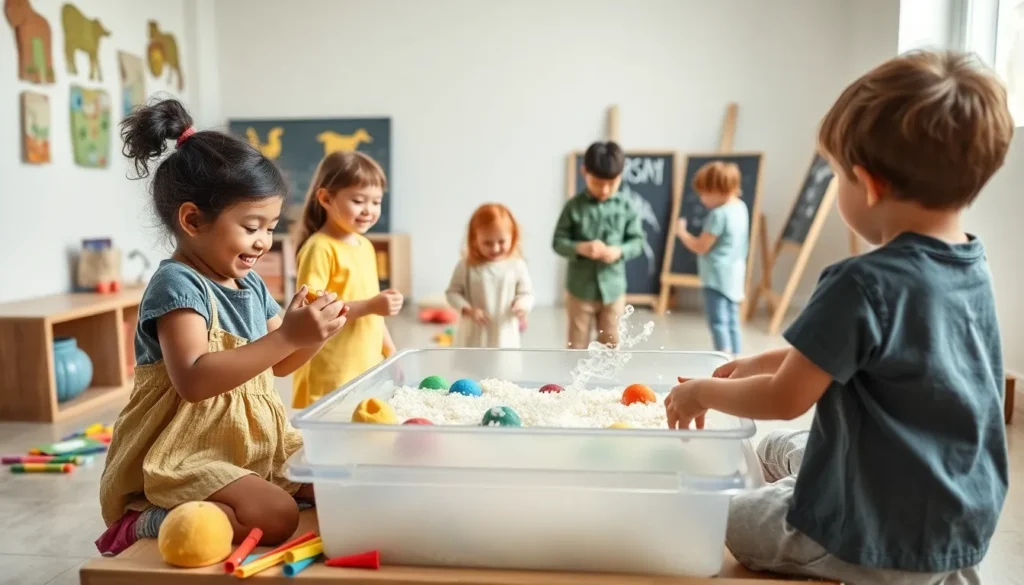
Tactile games encompass a variety of activities designed to engage children’s senses and enhance their development. These activities provide opportunities for hands-on exploration, fostering creativity and skill through interacting with different materials.
Sensory Play Activities
Sensory play activities focus on activating children’s senses through exploration and manipulation. Examples include:
- Play Dough: Kids mold shapes, improving fine motor skills and creativity.
- Sensory Bins: Bins filled with rice, beans, or sand encourage exploration through scooping and pouring.
- Water Play: Activities like pouring and splashing aid in hand-eye coordination and sensory awareness.
- Textured Art: Incorporating various materials like fabric, paper, or natural items stimulates tactile sensations and artistic expression.
Board Games with Textures
Board games featuring textures engage children in interactive and sensory-rich experiences. Key examples include:
- Tactile Matching Games: Games that require matching textured cards enhance memory and sensory recognition.
- Textured Dice Games: Games involving dice with different surfaces provide varied tactile feedback and promote counting skills.
- Interactive Storyboards: Boards featuring textured elements encourage storytelling and imaginative play.
These structured yet dynamic forms of tactile games effectively promote both cognitive and sensory development in children.
How to Choose Tactile Games
Selecting suitable tactile games requires consideration of several factors to maximize benefits for children’s development.
Age Appropriateness
Age appropriateness plays a crucial role in choosing tactile games. Games designed for younger children often feature larger pieces and simpler tasks, while those for older children include more complex activities that challenge their skills. Selecting games that align with a child’s developmental stage ensures they stay engaged and can effectively benefit from the sensory experiences. For example, toddlers may enjoy squishy toys or simple clay models, whereas school-age children might prefer intricate textured puzzles or crafting kits.
Safety Considerations
Safety considerations are paramount when selecting tactile games. Materials should be non-toxic and free from small parts that could pose choking hazards, particularly for younger children. It’s essential to check for safety certifications, such as ASTM or CPSIA, which indicate compliance with safety standards. Additionally, ensuring games are durable and designed for repeated use reduces risks associated with wear and tear. Thoroughly inspecting games before play can help identify any potential hazards, promoting a safe and enjoyable tactile experience for kids.
Recommended Tactile Games for Kids
Numerous tactile games enhance children’s sensory experiences while promoting cognitive development. Below are curated selections of popular market games and engaging DIY tactile ideas.
Popular Games in the Market
- Play-Doh: This classic molding compound encourages creativity and fine motor skill development through sculpting and shaping activities.
- Sensory Bins: These bins contain various materials, such as rice, beans, or sand, allowing children to explore textures while developing hand-eye coordination.
- Tactile Matching Games: Games like “Feel and Find” feature textured cards that match various objects, enhancing memory and sensory discrimination.
- Textured Dice: Dice with different surfaces add a sensory element to classic games, improving counting and tactile recognition in play.
- Squishy Balls: These stress-relief toys offer children a chance to squeeze and manipulate different textures, promoting sensory integration and fine motor skills.
DIY Tactile Game Ideas
- Homemade Sensory Bags: Fill ziplock bags with various textures like hair gel, foam beads, or glitter. Seal securely and let children explore these tactile experiences.
- Textured Rocks: Collect smooth and rough stones, allowing kids to paint or decorate them, fostering creativity and sensory awareness.
- Water Bead Play: Soak water beads, let kids squish and play with them. This sensory activity stimulates tactile sensations and enhances fine motor skills.
- Fabric Swatch Books: Gather different fabric pieces—smooth, rough, fuzzy—into a book format for children to explore varying textures.
- Sensory Path: Create a path with different materials like bubble wrap, carpet, and grass. Allow kids to walk barefoot, experiencing various sensations that improve balance and motor coordination.
These recommended tactile games and DIY ideas present opportunities for kids to engage in meaningful play, cultivating their sensory and motor skills effectively.
Tactile games play a crucial role in children’s development by offering engaging ways to explore and learn. These activities not only enhance fine motor skills but also stimulate cognitive growth through problem-solving and creativity. By selecting age-appropriate and safe tactile games, parents and educators can create enriching environments that foster curiosity.
Whether through commercial games or DIY projects, the opportunities for sensory exploration are vast. Embracing tactile play can lead to lasting benefits in children’s lives, equipping them with essential skills for future learning and discovery. Investing time in these hands-on experiences will undoubtedly yield rewarding outcomes for young learners.