In a world dominated by screens and digital distractions, kids board games offer a refreshing way to engage young minds. These games not only entertain but also foster critical thinking, teamwork, and social skills. Parents and caregivers are discovering that gathering around a game board can create lasting memories and strengthen family bonds.
From classic favorites like Monopoly and Scrabble to innovative new titles, there’s a board game for every age and interest. With options that cater to various skill levels, kids can learn valuable lessons while having fun. By exploring the vibrant world of kids board games, families can unlock a treasure trove of enjoyment and educational opportunities.
Overview of Kids Board Games
Kids board games serve as excellent tools for entertainment and education. They encompass a diverse range of themes and mechanics, appealing to various age groups and skill levels.
Categories of Kids Board Games
- Classic Board Games
Classic board games like Monopoly, Scrabble, and Chutes and Ladders remain popular due to their simplicity and timeless appeal. These games often enhance vocabulary, mathematics, and strategic thinking.
- Educational Board Games
Educational board games focus on subjects such as science, history, and language arts. Titles like Robot Turtles and The Game of Life encourage learning while playing, making education engaging.
- Strategy Board Games
Strategy board games include options like Catan and Ticket to Ride, challenging players to develop critical thinking and planning skills. These games suit older kids and promote problem-solving.
- Party Games
Party games such as Apples to Apples and Pictionary foster social interaction and laughter among players. These games typically require minimal setup and invite creativity.
- Collaborative Board Games
Collaborative board games like Pandemic and Forbidden Island encourage teamwork. Players work together to achieve a common goal, enhancing communication and bonding among participants.
Benefits of Playing Kids Board Games
Kids board games cultivate vital skills. They promote critical thinking and strategic planning while enhancing social interaction. Family members engage with each other, form stronger relationships, and create lasting memories.
These games also offer age-appropriate challenges, ensuring players develop confidence as they progress through different levels. With a variety of themes and mechanics, board games present opportunities for both learning and fun.
Benefits of Playing Board Games
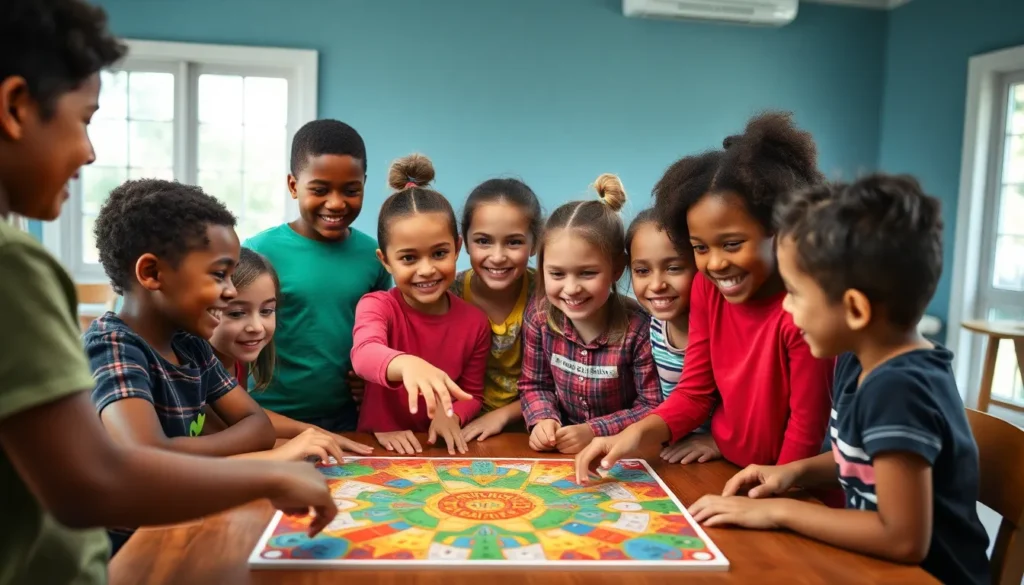
Board games promote various essential skills for children, offering benefits that extend beyond entertainment. Playing these games helps develop cognitive abilities and enhance social interactions.
Cognitive Development
Cognitive development occurs as children engage in board games, enhancing skills such as problem-solving, reasoning, and critical thinking. Games like Scrabble improve vocabulary and spelling, while Monopoly teaches money management and strategic planning. Participation in these activities stimulates brain activity, fostering better decision-making. Players also learn to anticipate opponents’ moves, which sharpens analytical skills. Overall, regular play can lead to improved academic performance and higher cognitive resilience in various tasks.
Social Skills Enhancement
Social skills enhance as children play board games in group settings, encouraging communication and teamwork. Games that require turn-taking teach patience and sportsmanship. Collaborative games, such as Pandemic, help players work together towards a common goal, boosting collaboration and empathy. Through playful interactions, children learn to navigate social dynamics, resolve conflicts, and build friendships. Consequently, regular involvement in these activities fosters a sense of community and belonging, vital for emotional development.
Types of Kids Board Games
Kids board games come in various types, each fostering unique skills and experiences. These categories include educational games, strategy games, and cooperative games, each offering distinct benefits.
Educational Games
Educational games make learning enjoyable while encouraging skill development. They often incorporate subjects like math, science, and language arts into gameplay. For instance, Sum Swamp teaches basic math concepts, while games like Word on the Street enhance vocabulary and spelling. These games help children grasp essential concepts in a fun and engaging manner, linking play with academic growth.
Strategy Games
Strategy games challenge kids to think critically and plan ahead. Games like Ticket to Ride and Catan require players to devise tactics and make decisions that impact gameplay. Such games improve problem-solving skills and teach resource management, as players must assess their options and plan their next moves strategically. This category encourages players to develop foresight and adaptability, vital skills for future success.
Cooperative Games
Cooperative games emphasize teamwork and collaboration, requiring players to work towards a common goal. Titles like Pandemic and Forbidden Island engage children in joint problem-solving. They facilitate communication and teach conflict resolution as players must share resources and strategize together. These games foster empathy and promote a sense of community, essential components for healthy social interactions.
Popular Kids Board Games
Board games remain a favorite choice among children, offering engaging and educational experiences. Below are examples of classic and modern board games that appeal to various age groups and interests.
Classic Board Games
Classic board games offer timeless fun and valuable lessons. Here are notable examples:
- Monopoly: Teaches money management and negotiation. Players buy, sell, and trade properties while aiming to bankrupt opponents.
- Scrabble: Enhances vocabulary and spelling. Players create words on a game board using letter tiles, scoring points based on letter value.
- Candy Land: Introduces basic counting and color recognition. Players move along a colorful path to reach King Kandy’s Castle, ideal for younger children.
- Simon Says: Engages kids in following instructions and developing listening skills. Players must only act when “Simon” gives a command.
- Chutes and Ladders: Teaches counting and number recognition. Players navigate a board based on dice rolls, encountering chutes and ladders that alter their paths.
Modern Board Games
- Ticket to Ride: Encourages strategic thinking through railway building across the map. Players collect train cards to connect cities and earn points.
- Catan: Promotes resource management and negotiation. Players gather resources to build settlements and roads while trading with others.
- Forbidden Island: Focuses on teamwork as players collaborate to recover treasures from a sinking island. Success relies on communication and strategic planning.
- Azul: Engages players in pattern building and tile placement. Players compete to create beautiful mosaics while scoring points based on their designs.
- Dixit: Enhances creativity and storytelling. Players use illustrated cards to convey a narrative, encouraging imaginative interactions among players.
Tips for Choosing the Right Game
Selecting the right board game for kids involves considering several key factors to ensure an enjoyable experience. These factors include age appropriateness and the number of players.
Age Appropriateness
Age appropriateness significantly influences game selection. Games should match the cognitive and developmental levels of children to maintain engagement and understanding.
- Check age recommendations on the game box; they offer guidance based on typical skills and comprehension.
- Consider interest levels and maturity; a game suited for older children may be too complex or uninteresting for younger ones.
- Pick simpler games for preschoolers, such as Candy Land or Chutes and Ladders, focusing on basic counting and turn-taking.
- Select moderately challenging games for elementary-age children, such as Ticket to Ride and Scrabble, that enhance strategic thinking and vocabulary.
- Choose more complex strategy games for tweens and teens, such as Catan and Pandemic, to foster critical thinking and teamwork.
Number of Players
The number of players determines the social dynamics and overall enjoyment of a game.
- Identify games with flexible player ranges to accommodate different group sizes.
- Opt for games designed for larger groups, like Dixit and Telestrations, which promote interaction and collaboration.
- Look for two-player games, such as Lost Cities or Hive, which are engaging for smaller sibling pairings or friends.
- Ensure that player limits fit the typical size of family or friend gatherings, enhancing participation for everyone involved.
- Factor in competition level; games that allow for both cooperative and competitive play can cater to varying preferences, making them suitable in diverse settings.
Kids board games offer a rich blend of fun and learning that can’t be matched by screens. They engage children in meaningful ways while fostering essential skills like critical thinking and teamwork. As families gather around the table, they create cherished memories that strengthen their bonds.
With a variety of options available, from classic favorites to innovative new titles, there’s something for every age and interest. These games not only entertain but also promote cognitive development and social interaction. By choosing the right games, families can ensure that playtime is both enjoyable and beneficial. Embracing board games can lead to a more connected and resilient family dynamic.