In a world where creativity and critical thinking are essential, finding fun ways to enhance children’s cognitive skills is more important than ever. Brain-boosting games not only entertain but also challenge young minds, fostering development in areas like problem-solving, memory, and attention. These engaging activities provide a perfect blend of learning and play, making them ideal for kids of all ages.
Parents and educators alike are discovering the benefits of incorporating these games into daily routines. From interactive puzzles to strategy-based board games, there’s a wealth of options that can stimulate brain activity while keeping kids engaged. By embracing these brain-boosting games, families can create a stimulating environment that nurtures curiosity and learning, setting the stage for lifelong success.
Overview of Brain-Boosting Kids Games
Brain-boosting kids games enhance cognitive development while offering entertainment. These games foster critical thinking, improve memory retention, and strengthen attention spans. Parents and educators recognize various types, including:
- Interactive puzzles: These challenge problem-solving abilities and spatial awareness.
- Strategy-based board games: These encourage planning, decision-making, and teamwork.
- Creative storytelling games: These stimulate imagination and language skills.
- Memory card games: These enhance recall and concentration.
Active participation in these activities encourages curiosity and learning. Each game offers specific educational benefits, allowing children to develop essential skills while having fun. By integrating brain-boosting games into playtime, families create enriching environments conducive to lifelong success.
Types of Brain-Boosting Kids Games
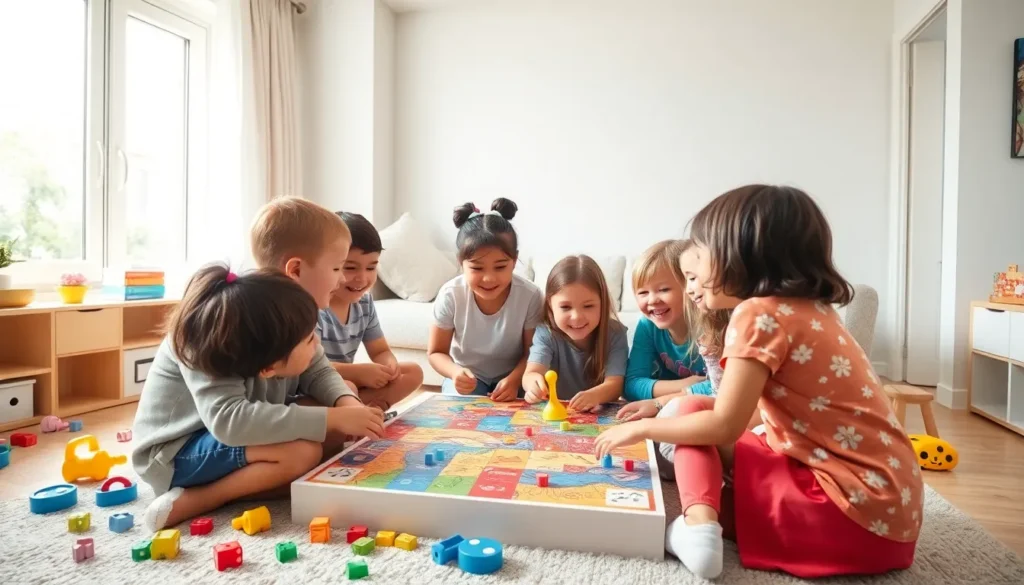
Various types of brain-boosting games enhance children’s cognitive abilities. These games focus on different skills, making learning engaging and enjoyable.
Board Games
Board games offer strategic challenges, encouraging critical thinking and social interaction. Games like Chess develop strategic planning skills, while Ticket to Ride promotes spatial awareness and resource management. Jenga enhances fine motor skills and hand-eye coordination, all within a collaborative and competitive atmosphere. These games often require players to plan ahead, make decisions, and adapt their strategies, thus fostering teamwork and communication.
Digital Games
Digital games provide immersive experiences that enhance learning through interactive play. Games like Brain Age and Lumosity focus on brain training, improving memory, attention, and problem-solving skills. Platforms like Osmo integrate physical play with digital elements, allowing kids to engage tangibly while boosting creativity and logical thinking. Many educational apps offer personalized learning paths, adapting to children’s individual skill levels, ensuring challenges are appropriately matched to their capabilities.
Benefits of Brain-Boosting Kids Games
Brain-boosting games provide a wide range of developmental advantages for children. These games enhance cognitive abilities and promote social interactions among peers.
Cognitive Development
Cognitive development encompasses various mental processes. Brain-boosting games enhance critical thinking, problem-solving, and memory retention. For instance, puzzles require children to analyze information and identify patterns, fostering logical reasoning. Strategy-based games like Chess promote planning and foresight, exercising analytical skills. Engaging in these activities not only improves intellectual capabilities but also enables children to approach challenges with confidence.
Social Skills Improvement
Social skills development occurs naturally through interactive play. Cooperative games encourage teamwork and communication, allowing children to practice negotiation and conflict resolution. For example, board games that require players to work together enhance collaboration and social understanding. Additionally, turn-taking and sharing foster respect for others and patience. Through these experiences, children build lasting friendships and develop essential interpersonal skills that contribute to their overall success in social environments.
Popular Brain-Boosting Kids Games
Various games enhance children’s cognitive skills while providing entertainment. Selecting appropriate games based on age and developmental needs ensures maximum benefits.
Game Recommendations for Different Ages
- Toddlers (1-3 years): Simple shape sorters and stacking toys. These encourage hand-eye coordination and basic problem-solving.
- Preschoolers (4-5 years): Memory matching games and basic puzzles. These enhance memory recall and critical thinking.
- Early Elementary (6-8 years): Strategy games like Checkers and collaborative board games. These promote planning and teamwork.
- Middle Childhood (9-12 years): Chess and more complex puzzles. These develop strategic thinking and improve concentration.
- Teens (13 years and up): Digital games like Portal and simulation games like The Sims. These enhance logical reasoning and creativity.
Criteria for Choosing Effective Games
- Age Appropriateness: Game content and difficulty should align with children’s age and cognitive stage.
- Engagement Factor: Games should captivate attention and encourage active participation.
- Skill Development: Choose games that specifically target skills like memory, problem-solving, and social interaction.
- Educational Value: Select games designed with educational outcomes, offering a mix of fun and learning.
- Cooperative Play: Opt for games that allow for social interaction and teamwork, fostering communication and collaboration skills.
Tips for Parents
- Select age-appropriate games. Ensure that games match your child’s developmental stage to promote engagement and skill acquisition effectively.
- Encourage cooperative play. Opt for games that require teamwork. This interaction improves social skills while enhancing cognitive development.
- Limit screen time. Balance digital games with physical or board games. This variety promotes different skill sets and prevents overreliance on technology.
- Integrate game time into routines. Set aside specific times during the week for games. This consistency fosters a learning environment while making learning fun.
- Discuss game strategies. After gameplay, engage in discussions about strategies used. This reflection enhances critical thinking and reinforces skills learned.
- Monitor progress. Observe how games impact your child’s cognitive and social skills. Adjust the selection of games based on their evolving needs and interests.
- Mix educational elements. Choose games that also teach academic concepts, like math or language skills. This integration maximizes the educational value while keeping gameplay enjoyable.
- Participate actively. Join in on game sessions. Your involvement demonstrates support and illustrates the value of learning through play.
Embracing brain-boosting games is a powerful way for parents and educators to nurture children’s cognitive and social skills. These games provide a fun avenue for learning while fostering essential abilities like problem-solving and teamwork. By selecting age-appropriate options and incorporating them into daily routines, families can create an engaging environment that stimulates curiosity and creativity.
As children play, they not only enjoy themselves but also develop critical skills that will serve them well throughout their lives. The right games can make a significant difference in a child’s development, paving the way for future success in both academic and social settings. Investing time in these activities is a step toward building a brighter future for the next generation.