In today’s fast-paced educational landscape, group learning games are emerging as powerful tools for enhancing collaboration and engagement among learners. These interactive activities not only make learning fun but also foster essential skills like teamwork, communication, and critical thinking. Whether in a classroom or a corporate training environment, group games create a dynamic atmosphere where participants can thrive together.
As educators and trainers seek innovative ways to captivate their audience, incorporating group learning games can transform traditional teaching methods. By breaking down barriers and encouraging participation, these games help individuals connect with one another, making the learning experience more memorable and effective. Embracing this approach can lead to improved outcomes and a more cohesive learning community.
Overview of Group Learning Games
Group learning games foster collaboration and engagement among participants. These interactive activities enhance essential skills such as teamwork, communication, and critical thinking. By incorporating group games into educational settings, educators create an inclusive atmosphere that promotes social interaction.
Benefits of Group Learning Games
- Improved Collaboration: Group activities encourage teamwork as participants work towards common goals, promoting a sense of belonging.
- Enhanced Communication: Participants practice conveying ideas clearly, leading to better interpersonal skills.
- Increased Engagement: Fun, interactive formats capture attention and motivate learners to participate actively.
- Development of Critical Thinking: Challenging tasks stimulate problem-solving abilities, enabling learners to think creatively.
Types of Group Learning Games
- Icebreakers: Simple games that help participants get acquainted and build rapport.
- Team Building Activities: These focus on strengthening relationships and trust among group members.
- Educational Quizzes: Competitive quizzes solidify knowledge and encourage collaborative study.
- Role-Playing Games: Participants assume roles to explore scenarios, enhancing empathy and understanding.
Implementation Strategies
- Set Clear Objectives: Define specific learning outcomes for each game to maximize effectiveness.
- Encourage Participation: Foster an inclusive environment where every member feels valued and motivated to contribute.
- Debrief After Games: Discuss learning experiences post-activity to reinforce concepts and gather feedback.
- Adapt Games to Learner Needs: Customize group games to accommodate diverse skill levels and learning preferences.
Group learning games serve as powerful tools in educational settings, offering opportunities for skills development and richer learning experiences.
Benefits of Group Learning Games
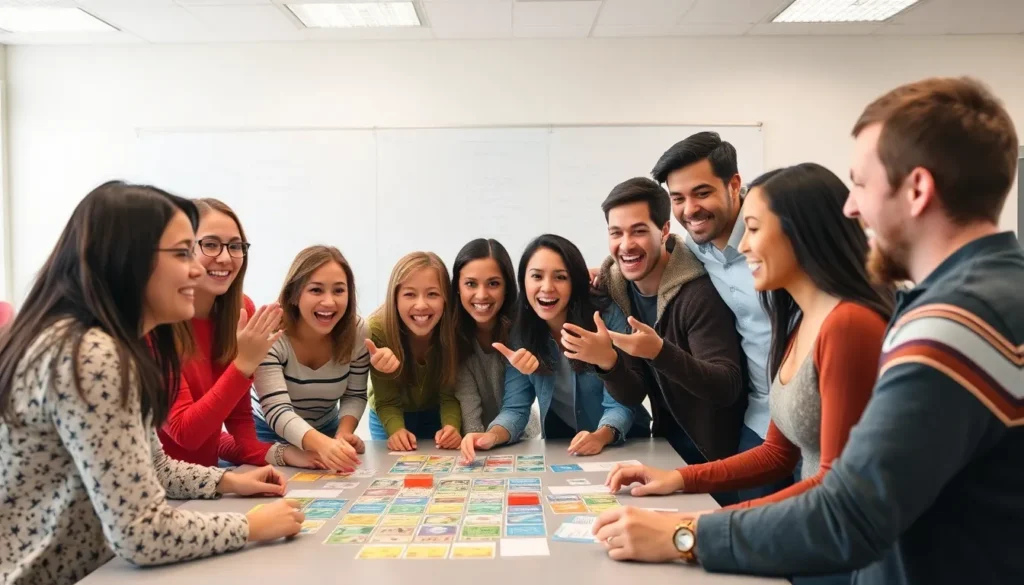
Group learning games provide multiple advantages, fostering an interactive environment conducive to skill development. These benefits include enhanced engagement, improved collaboration skills, and much more.
Enhanced Engagement
Engagement levels significantly increase when participants play group learning games. Interactive activities hold learners’ attention longer, making it easier for them to absorb and retain information. Gamified elements, such as competition and rewards, motivate participants to participate actively. Research indicates that engaging learning experiences lead to higher knowledge retention, as learners feel more connected to the material. For example, educational quizzes, where teams compete for points, create a lively atmosphere that encourages enthusiasm and commitment.
Improved Collaboration Skills
Collaboration skills improve as learners work together in group games. Participants communicate, share ideas, and solve problems collectively, fostering trust and respect within the team. Group learning games encourage individuals to appreciate diverse perspectives, enhancing their ability to cooperate effectively. According to studies, effective collaboration enhances problem-solving abilities, leading to more innovative solutions. Team-building activities, such as role-playing or scenario-based tasks, exemplify how structured group interactions can cultivate these essential skills, preparing individuals for future teamwork scenarios.
Types of Group Learning Games
Group learning games come in various formats, each designed to enhance learning experiences through collaboration and engagement. Below are two primary categories of group learning games that foster social interaction and skill development.
Icebreaker Games
Icebreaker games serve to warm up participants and establish a comfortable atmosphere for group interaction. These games typically focus on introducing individuals, building rapport, and easing any tension present in new or diverse groups. Examples of icebreaker games include:
- Two Truths and a Lie: Participants share two true statements and one false statement about themselves, prompting discussion and laughter.
- Human Bingo: Players fill a bingo card with personal traits or experiences, encouraging them to mingle and learn about each other’s backgrounds.
- Name Game: Individuals create an alliterative phrase or action related to their name, helping participants remember names and create a fun environment.
Icebreaker games enhance communication skills and foster a sense of community among participants, making them an essential component of group learning settings.
Problem-Solving Games
Problem-solving games focus on critical thinking and team collaboration, challenging participants to work together toward a common goal. These games encourage creativity and innovation through strategic thinking. Examples of problem-solving games include:
- Escape Room Challenges: Participants collaborate to solve puzzles and riddles, emphasizing teamwork and communication as they “escape” within a set time.
- Building Blocks: Teams receive limited materials to construct specified structures, promoting resource management and engineering skills.
- Mystery Scenarios: Groups analyze fictional case studies or problems, encouraging discussion and exploring multiple solutions through teamwork.
Problem-solving games significantly enhance critical thinking and collaboration skills, preparing participants for real-world challenges and teamwork dynamics.
Designing Effective Group Learning Games
Designing effective group learning games requires thoughtful planning and consideration of various factors to maximize engagement and educational value. By focusing on clear objectives and understanding group dynamics, educators can create impactful experiences.
Setting Clear Objectives
Setting clear objectives provides direction for group learning games. Objectives should align with educational goals to ensure players understand the purpose of the activity. Specific, measurable outcomes can enhance focus and performance. For instance, a game aimed at improving communication might define objectives like “enhancing active listening skills” or “promoting conflict resolution strategies.” By outlining these goals in advance, educators can evaluate the game’s effectiveness and learning impact more accurately.
Considering Group Dynamics
Considering group dynamics is essential for the success of group learning games. Each group’s composition affects how individuals interact and engage with one another. Factors such as personality types, existing relationships, and diverse skill levels should guide the game selection process. For example, a group of extroverts may thrive in competitive games, while groups with varying skill levels might benefit from cooperative activities. Understanding these dynamics can foster inclusivity and ensure that all participants feel valued, enhancing collaboration and overall experience.
Group learning games are transforming educational experiences by fostering collaboration and engagement. These interactive activities not only make learning enjoyable but also cultivate essential skills that participants will carry into their future endeavors.
As educators embrace these games, they create inclusive environments that promote teamwork and critical thinking. By implementing effective strategies and tailoring activities to meet diverse learner needs, they can maximize the benefits of group learning games.
Ultimately, integrating these dynamic tools into educational settings will lead to stronger communities and improved learning outcomes. Embracing the power of play in learning is a step toward preparing individuals for successful teamwork in the real world.